Tankless Water Heater Service in Huachuca City: Endless Hot Water Needs the Right Gas Line, Vent and Upkeep
A tankless unit that shuts off mid shower, flashes an error code or delivers lukewarm water is rarely broken beyond repair. The usual causes are scale, a blocked inlet screen or a gas line that cannot feed it. Call (520) 340-7175, describe the code or the symptom and the call is handed to a plumber in your area.
- Troubleshooting and repair of tankless units
- Installation with the gas and vent checked first
- Descaling and flushing to protect the heat exchanger
- Licensed and insured plumbers
- Same-day service when available
- 24/7 emergency dispatch
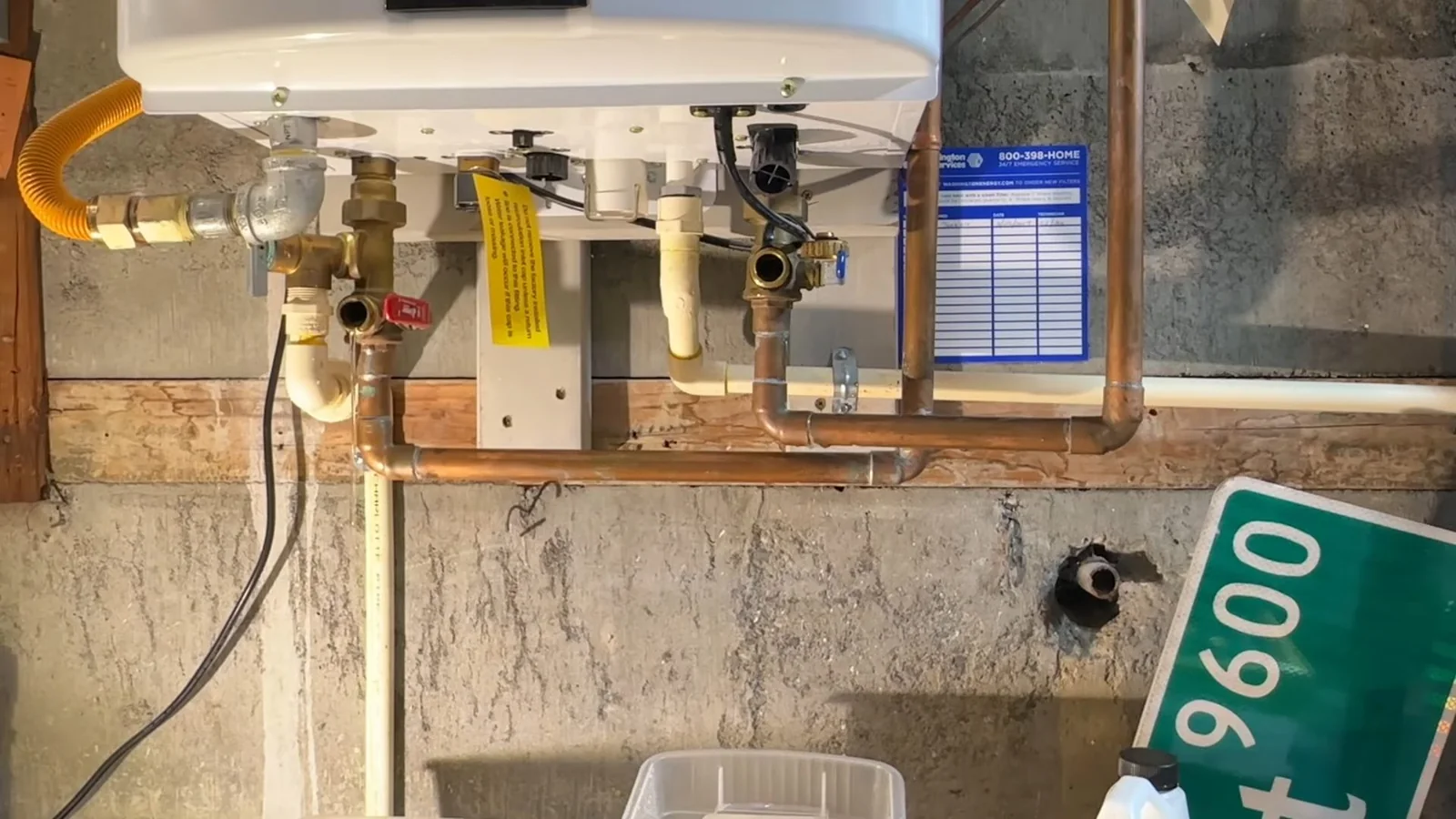
Tankless unit cold, cycling or showing an error code?
Tankless heaters fail in patterns, and most patterns have a short list of causes. Start with what the unit does and when it does it.
| What you see | Likely cause | First step |
|---|---|---|
| Water turns cold after a minute | Scale on the heat exchanger or a clogged inlet screen | Schedule a descale and screen clean |
| Unit will not fire | Low flow, a gas supply issue or an ignition fault | Check that gas is on and other appliances work |
| Error code on the display | Vent, flame or sensor trouble | Note the code, power cycle once, then call |
| Lukewarm water at one tap | Mixing from a crossed line or a low flow fixture | Test other taps before calling |
Close the gas valve at the unit only if it is quick to reach, then step outside and phone the gas utility or 911. A tankless repair can wait. A gas leak cannot.
Many faults clear after a clean and a reset. A plumber reads the code, checks the vent and flame and tells you whether the repair is a part or a pattern. Repeated failures in an older unit are a reason to talk about replacement.
Installing a tankless unit: gas size, vent and electric
A tankless unit pulls much more gas at once than a tank heater, so the existing gas line is the first thing to check. A line sized for a small tank can starve a tankless unit, and the symptom is a heater that fires weakly or shuts off.
- Gas line size and length from the meter to the unit.
- A direct vent path to the outside, often through a wall.
- A nearby outlet, since even gas units need power for the controls.
- Condensate drainage for high efficiency models.
- Space on a wall with clearances around the unit.
Upsizing a gas line is its own job, described under gas line upsizing. Electric tankless units skip the gas and vent but need a heavy circuit that the panel may not have to spare.
Tankless unit acting up? Call a plumber.
Tell the dispatcher the error code and what the water does. The call goes to a plumber serving your area.
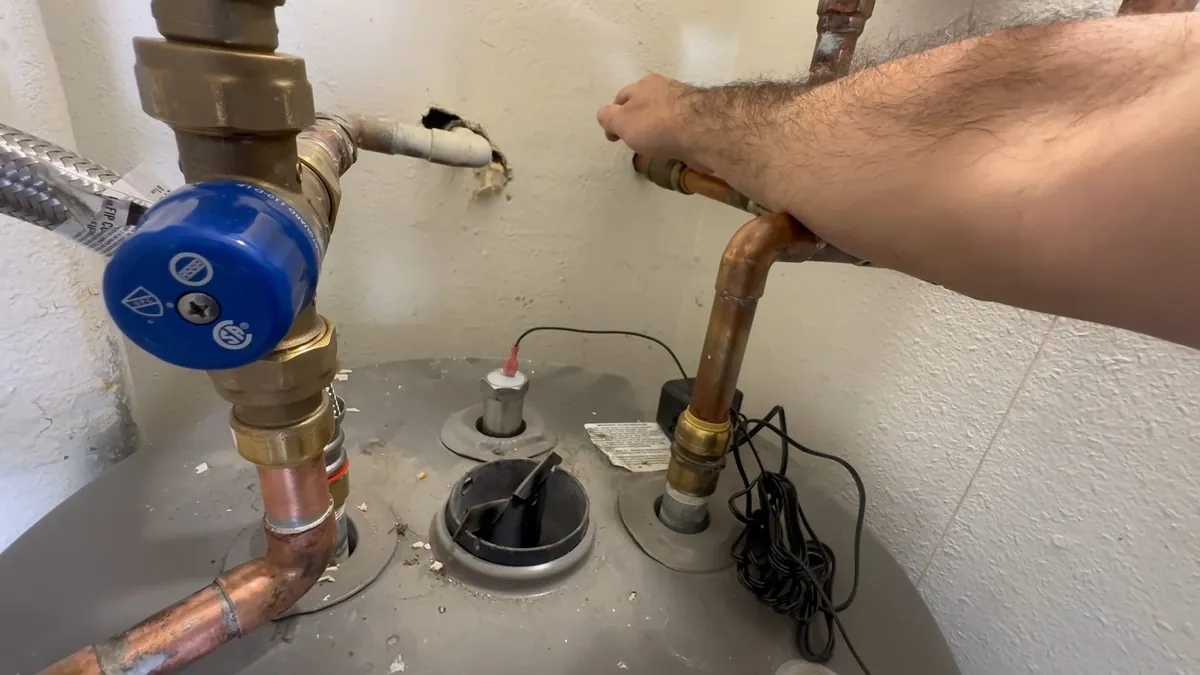
Flushing and descaling a tankless heater
Dissolved minerals coat the heat exchanger and narrow its passages. The unit then works harder, heats unevenly and eventually fails. A flush with a mild acid solution pumped through service valves dissolves most of the scale.
How often depends on the water. The Huachuca City and Sierra Vista water reports both leave out a hardness figure, so test your water or ask your provider. A yearly flush is a common starting point, and a water treatment reduces the need.
Sources: Town of Huachuca City 2023 consumer confidence report; Arizona Water Company Sierra Vista 2023 water quality report. Checked 2026-11-06.
Gas or electric: which tankless type suits the house?
The fuel is usually set by what the house already has, but the choice is worth a closer look when you are converting. Gas units deliver more hot water per minute and suit larger households. Electric units are quieter to install, need no vent and suit one or two people when the panel can carry the load.
Gas tankless
Strong flow for several fixtures. Needs a sized gas line, a vent and a drain for condensate on high efficiency models.
Electric tankless
No vent and no gas. Needs a heavy dedicated circuit, and flow is lower in colder incoming water.
Point-of-use electric
A small unit at one sink or shower. Good for a far fixture, not for the whole house.
Tankless against tank is a trade between space and cost. A tankless unit frees a closet and does not run out, while a tank is cheaper up front and easier to repair. Neither is right for every house, and the plumber should explain the gas and electrical side before you choose.
What happens during a tankless installation visit
- Survey the wall and the linesThe plumber checks the mounting wall, the gas pipe size, the vent route and the water connections.
- Shut off and remove the old heaterWater, gas and power are closed off, then the old tank is emptied and carried out.
- Mount and connect the unitThe tankless unit goes on the wall with service valves on the hot and cold lines, so later flushes are easy.
- Vent, gas and drainThe vent is sealed, the gas is leak-tested and the condensate line is run to a drain.
- Start up and walk throughThe unit is fired, the temperature is set and you are shown the display, the filter screen and the service valves.
Ask for the service valves to be included. They are the difference between a ten minute yearly flush and a long, messy one. Also ask where the inlet screen sits, since a clogged screen is one of the most common reasons for weak flow.
After the install, run each hot tap for a minute and listen for banging or whistling. A properly vented unit is not loud, and any smell of exhaust inside the house means the vent must be checked the same day.
Thinking of switching to tankless? Call with the details.
Share the current heater, the fuel and the number of bathrooms. Same-day service is offered when available.
Replacing a tank heater with tankless, or one tankless with another
Conversion from a tank to a tankless unit is common after a tank fails. The plumber relocates the connections, adds the vent and gas capacity and removes the old tank. Replacing a tankless unit with another is simpler when the vent and gas are sound.
Gas or electric is set by what the house has. Gas units give stronger flow in larger households. Electric units suit small households with a heavy circuit available. Several manufacturers make reliable units, so compare warranty length, parts availability and the first hour flow rate instead of the name alone.
Who pulls the permit is worth asking up front, and a house inside Huachuca City answers to the Town. For a straight tank comparison, see the water heater installation and replacement page.
Tankless water heater questions answered before the visit
Call (520) 340-7175Is a tankless heater worth it compared with a tank?
Whether your house has gas at all depends on the address, and a tankless unit needs a gas line that is large enough. That check comes first, because a line sized for a tank can starve the new unit.
If the gas line works or can be upsized, tankless saves space and gives continuous hot water. If not, a tank is usually the simpler answer.
How should I choose a brand of tankless water heater?
Use this checklist: 1. Compare warranty on the heat exchanger and on parts. 2. Ask whether parts are stocked locally. 3. Match the flow rate to your busiest hour. 4. Check the vent type the model needs. 5. Confirm the installer services the brand.
One caution: a low price on an unfamiliar brand can cost more if parts take weeks to arrive.
We shower twice at once and the tank runs cold. Would tankless fix that?
Picture two showers and a running dishwasher at seven in the morning. A tank empties and then takes time to recover.
A tankless unit keeps up as long as the total flow is within its rating and the gas line can feed it. If three fixtures run at once, a larger unit or two units may be needed.
Tankless heater down? Call now.
Describe the symptom and the dispatcher passes the call to a plumber who serves your area. Same-day service is offered when available.
- Licensed and insured plumbers
- Same-day service when available
- 24/7 emergency dispatch