Emergency Leak Detection in Huachuca City: Hidden Leaks, Wet Walls and Rising Water Bills
Most people think a leak means a puddle. Many never make one. The water runs inside a wall, under a floor or along a buried line, and the first sign is a stain, a musty smell or a water bill that jumped. Call (520) 340-7175 and describe what you see. A dispatcher takes the details and passes them to a plumber who covers your address.
- Hidden leaks in walls, floors and buried lines
- Fixture, appliance and supply line leaks
- Pressure testing and pipe condition checks
- Licensed and insured plumbers
- Same-day service when available
- 24/7 emergency dispatch
Who repairs the leak once the source is found?
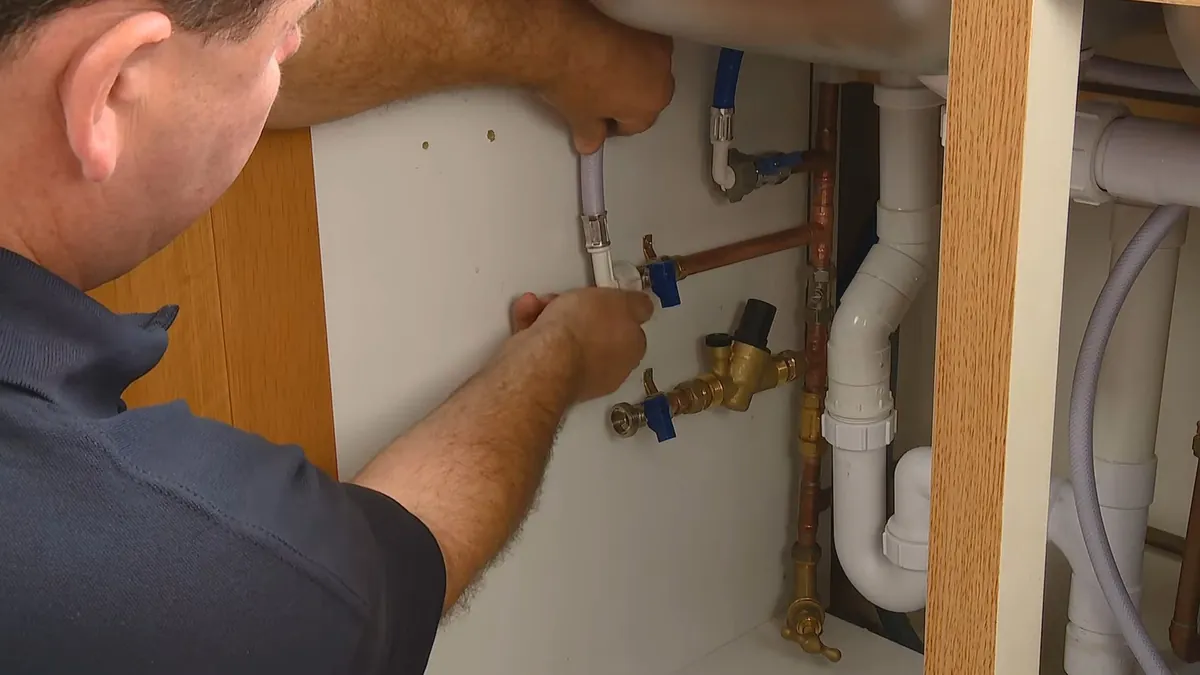
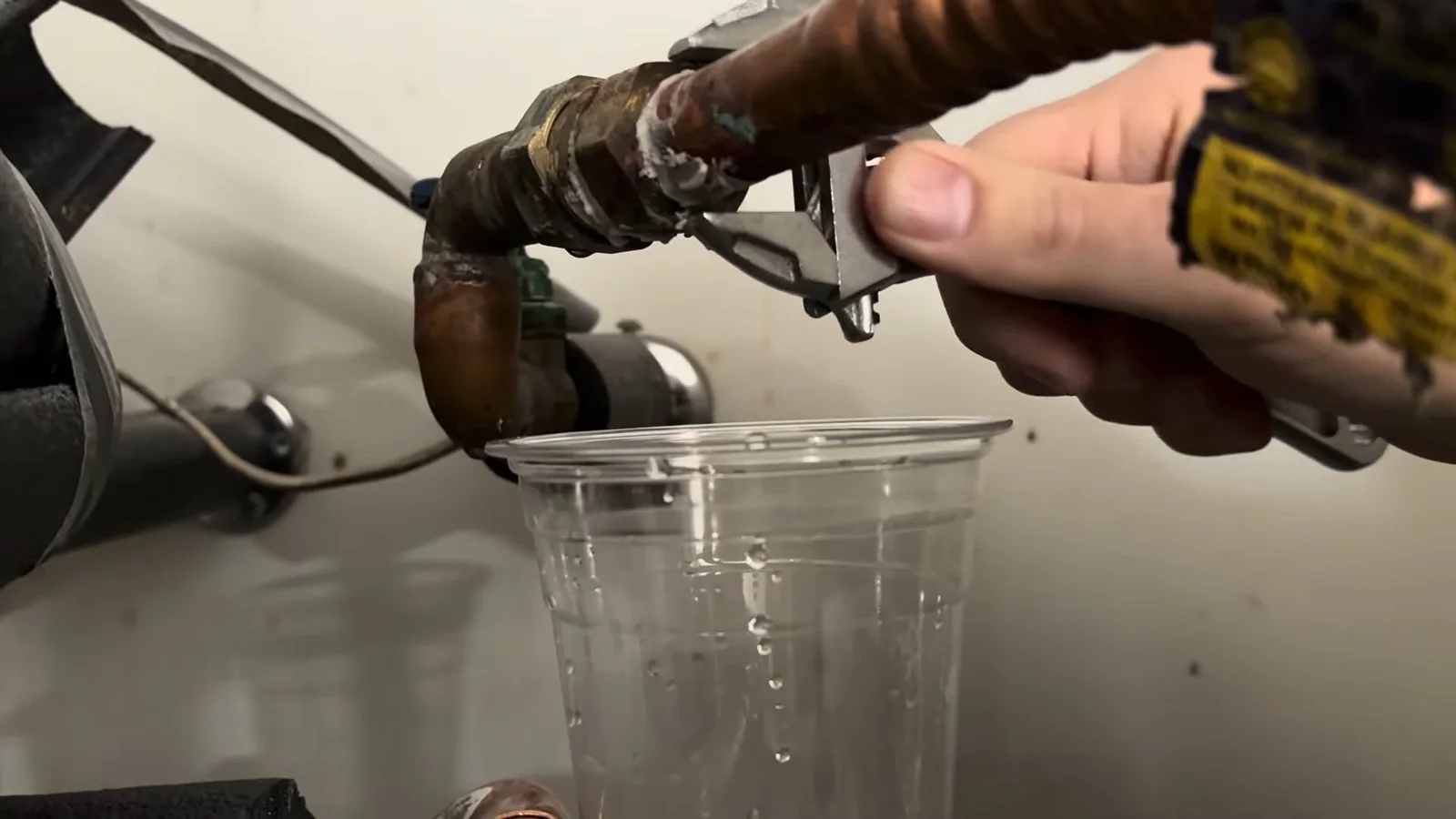
The plumber who finds a leak usually repairs it, which saves a second visit. Leak repair for plumbing systems starts with closing the water and exposing only as much pipe as the job needs. The damaged length comes out, or the failed fitting, valve or connector is replaced, and the line is pressure tested before anything is closed back up.
- Shut off and confirmThe water is closed at the nearest valve or the main, and the plumber confirms the leak has stopped feeding.
- Locate the sourceThe wet area is followed back to the point where water actually escapes, since the stain is often a few feet away from the break.
- Open only what is neededA small opening in drywall, flooring or soil is made at the marked spot rather than a large one along the whole run.
- Repair or replace the sectionThe damaged stretch is cut away and fresh pipe is fitted in its place. A worn valve or supply line is swapped as a unit.
- Test and documentThe line is brought back to pressure and watched for weeping at every joint. Photos of the leak and the repair help if you need them later.
Major water leaks, such as a split supply line or a failed joint spraying water, are handled first and quickly. A slow weep at a fitting can usually wait for a scheduled visit. A short phone consultation sorts the two apart: what you see, where it is, and whether the main is closed.
If the leak has already wet floors or walls, drying and cleanup are a separate job. Water damage response covers that part.
How is a hidden leak found without opening the wall?
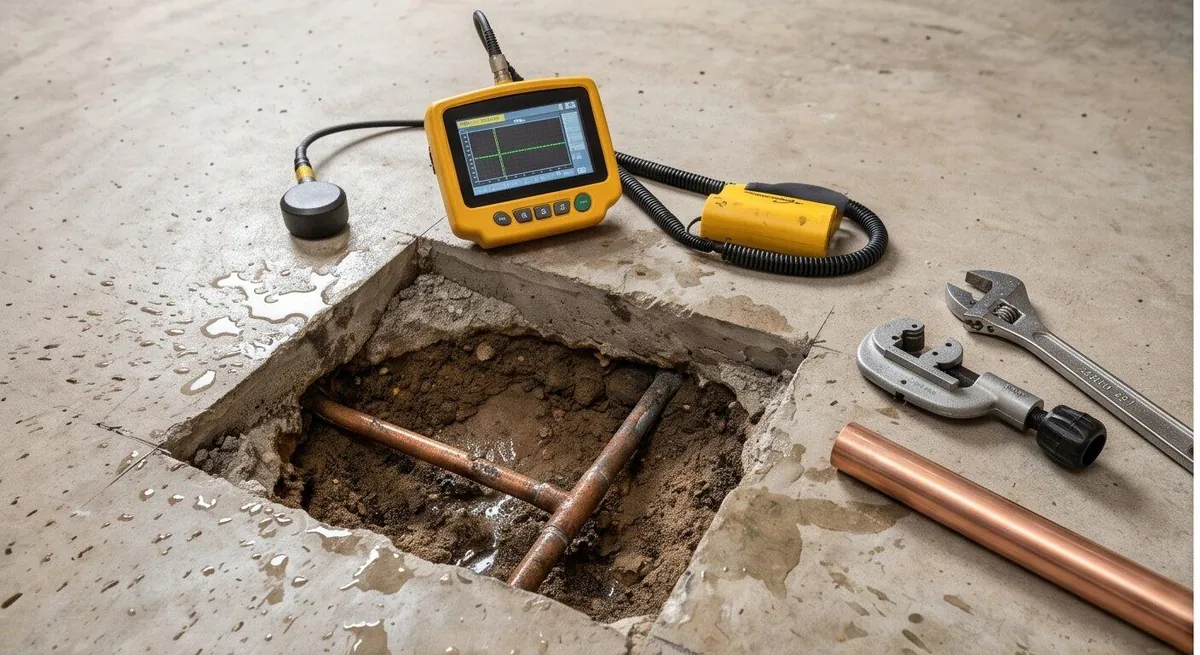
Leak detection service means narrowing a search from the whole house to a spot you can point at. Electronic and acoustic listening picks up the sound of water escaping from a pressurized line. Thermal and infrared imaging show temperature differences in wet drywall or warm-water lines. Whole house leak detection also uses pressure testing to decide which section of pipe to look at first.
| Method | Works best for | What it cannot tell you |
|---|---|---|
| Electronic and acoustic listening | Pressurized lines under floors and inside walls | The exact depth of a deep buried line |
| Thermal and infrared imaging | Wet drywall, ceilings and warm-water lines | Leaks in cold lines with no surface change |
| Pressure or hydrostatic testing | Deciding whether a section holds pressure | Where along the section the leak is |
| Tracer gas, including helium | Hard cases other methods cannot place | Whether the pipe elsewhere is sound |
Smart leak detection devices, such as flow monitors and shutoff valves, can flag a leak while you are away. They do not locate it. The marked spot, a photo and a note of the method used make up the leak location documentation, which is useful if an insurance claim follows.
Leak somewhere you cannot reach? Call a plumber.
Tell the dispatcher where you see water, whether the main is closed and when the problem started. Same-day service is offered when available.
A water meter check you can do tonight
A meter reading tells you whether water is leaking without opening anything. It also answers the question behind most high water bill calls: is this a leak or just use.
- Stop all water useClose every tap, make sure no appliance is running and turn off any ice maker or humidifier.
- Read the meterOpen the meter box, read the dial and note the number, or watch the small low-flow dial.
- Wait and read againWait 30 minutes without using water, then check again. A moving dial or a changed number means water is leaving somewhere.
Which utility reads your meter depends on your address. The Town of Huachuca City runs water and sewer service through its Public Works Department. Sierra Vista addresses in this service area are served by Arizona Water Company, which reports groundwater from wells. Your bill names your provider. If the dial moves and the leak is at the meter itself, tell the provider. If it is past the meter, call a plumber.
Sources: Town of Huachuca City utilities and services page; Arizona Water Company Sierra Vista 2023 water quality report. Checked 2026-11-06.
Fixture and appliance leaks you can see
Not every leak is hidden. A dripping faucet, a toilet that keeps refilling and a shower valve that weeps behind the handle are fixture leaks, and most are small, local repairs. Faucet repair covers them in detail.
Silent toilet leaks are the ones that raise a bill. To check, add a few drops of food coloring to the tank and wait 15 minutes without flushing. Color in the bowl means the flapper is leaking. Water around the base of a toilet points to a seal, not the tank, and needs a plumber.
Appliance leaks start at the supply line or drain hose behind a washer, dishwasher or refrigerator. The small shutoff valve behind the appliance closes the water in seconds. A wall or ceiling stain below a bathroom or laundry room often traces back to one of these lines. A stain below a roof is a different problem for a roofer, and the plumber can tell you which one you have.
Emergency leak repair, with same-day visits when available, is for a split line or a leak that cannot be shut off.
Irrigation and sprinkler systems are a separate trade, so broken heads and zone valves go to an irrigation company.
Meter dial moving with every tap closed? Get it checked.
A moving dial means water is leaving somewhere. Call, describe the reading and the dispatcher will tell you whether this needs a plumber tonight.
Plumbing inspection: checking pipe condition before a leak starts
A plumbing system inspection looks at the pipes, valves and connections before they fail. The plumber inspects the relevant plumbing systems, checks visible pipe for corrosion, tests pressure on lines that matter and notes the age of shutoff valves and supply lines. A plumbing inspection for leaks is also reasonable before you buy a house or after a repair that did not hold.
Confirm what your home sits on before anyone looks under it. Some homes sit on a slab, others on a crawlspace or a basement, and each leaks in different places. Attic plumbing, crawlspace plumbing and basement plumbing, where a home has them, are the places slow leaks hide. A plumber confirms the foundation type on site rather than assuming it.
Inspection pairs well with a camera. Drain cleaning and camera inspection show the inside of a drain line, and sewer camera inspections before repairs show whether a sewer problem is a clog or a break. See clogged drain service and sewer line inspection and repair for those.
Census-based listings put the typical home here at about the mid 1970s, a secondary estimate. An older house has had longer for supply lines and fittings to wear, so asking the plumber to note the age of each is a sensible part of any inspection.
What happens when a small leak is ignored
Small leaks do not stay small. Ignoring small leaks lets water soften wood, lift flooring, feed mold and corrode the pipe it escapes from. Structural damage from prolonged leaks is slow, which is why it surprises people. Catch small leaks early and the repair stays a plumbing repair instead of becoming a restoration project.
Keep a leak history: the date, the place, what was done and what the meter showed. A second leak on the same line is a sign of pipe condition, not bad luck. At that point ask the plumber whether the line should be replaced, and read about pipe repair and repiping. For water that is running right now and will not stop, call the dispatch line on the home page or at (520) 340-7175.
Leak questions homeowners ask before calling
Call (520) 340-7175A refrigerator water line is leaking across my kitchen floor. What do I do, and how long does the fix take?
Water spreading from under the refrigerator, a warped floor edge or a damp cabinet base usually means the small line feeding the ice maker or water dispenser has failed. Common causes are a loose compression fitting, a cracked plastic line and a worn shutoff valve.
Close the small shutoff valve behind the refrigerator, or the supply valve under the nearest sink. If water has reached an outlet or cord, switch off that circuit at the panel before reaching behind the unit. The repair itself is usually a short visit once the line is reachable. Drying a wet floor takes longer and is a separate job.
Who handles an underground leak, the plumber or the water company?
It depends on where the leak is. If it is between the street and your meter, it belongs to the water provider. If it is between the meter and the house, it is on the property owner, and a plumber locates and repairs it.
Where the provider's responsibility ends varies by system, so ask the Town of Huachuca City Public Works Department or your water company where it ends at your meter. Reading the meter with everything off, as described above, shows whether water is leaving at all.
When should I call a plumber for a dripping faucet or a leaking toilet?
Call when the drip continues after you close the fixture's own shutoff valve, or when water appears around the base of a toilet or under a sink.
A faucet that drips from the spout is a worn washer or cartridge and can wait for a scheduled visit. Water on the floor, or a toilet that refills every few minutes, wastes water and can damage the floor, so do not leave it for weeks.
Is it better to call the property manager or a plumber for water in an apartment complex parking lot?
Public water and sewer service in Huachuca City belongs to the Town, so water coming up in a lot can be a public line or a private one, and that decides who is responsible.
Call the property manager first, since the owner decides who is hired for private lines. Give the manager the location, a photo and the time you first saw water. If the water is flowing from a public main or the street side of a meter, the manager reports it to the Town. A plumber can locate the source for the owner if it is unclear.
Found water where it should not be? Call now.
Describe what you see and the dispatcher will route the call to a plumber serving your area. Same-day service is offered when available.
- Licensed and insured plumbers
- Same-day service when available
- 24/7 emergency dispatch